

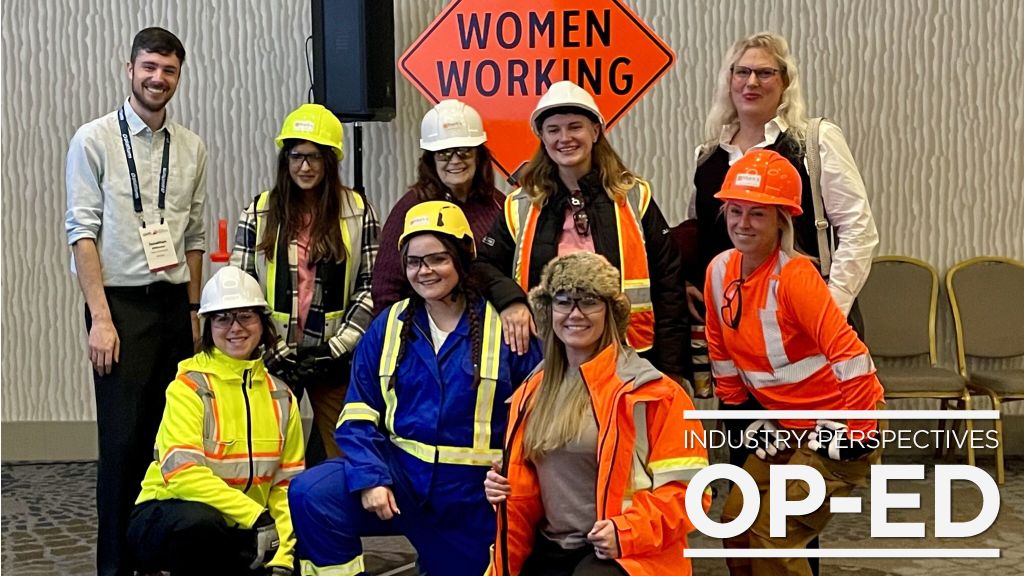
Recently, I had the opportunity to attend the Canadian Association of Women in Construction (CAWIC) Annual Conference in Calgary.
This year’s theme, Tools for Transformation, focused on the ideas, resources, connections and leadership needed to create meaningful change across Â鶹´«Ã½Ó³»â€™s Â鶹´«Ã½Ó³» industry.Â
One of my biggest takeaways was that transformation often starts with something fairly simple: listening to people and understanding what they need to do their jobs safely and effectively.Â
That matters because Â鶹´«Ã½Ó³» cannot afford to overlook the experience of any part of its workforce. The industry continues to face a significant skills shortage and needs to attract and retain workers from a diverse pool of talent. Â
We at CIOB firmly believe creating an environment where people have the right equipment, feel considered and can do their jobs safely is an important part of that.Â
Our view is that this isn’t just about providing more choice when it comes to workwear. It is about creating an industry where people can build long-term careers and where practical barriers that could make someone feel excluded are taken seriously.Â
That came through particularly clearly during the Mark’s Commercial PPE Showcase and Fashion Show. Â
For years, women have often had to rely on PPE originally designed around men and then adapted for women by simply making it smaller. But smaller does not necessarily mean better fitting. Â
The showcase brought some of these issues to life. We saw workwear designed around the practical challenges women can encounter in industrial environments, including coveralls with features intended to make using portable toilets easier. Â
We also saw clothing that reflected the fact Â鶹´«Ã½Ó³» jobs are not always confined to a single environment.
Faye Elford, a project manager, modelled an outfit that could transition from meetings and project reviews to a jobsite, with everyday workwear combined with appropriate PPE and safety footwear. Â
That reflects the reality of many roles across the industry, where someone might spend part of their day in an office and then be expected to walk around a Â鶹´«Ã½Ó³» site.Â
At 5’2″, I am used to clothing being too long or not being proportioned for my height, so I was not particularly surprised when the outfit selected for my first fitting did not fit properly.
What was encouraging was that Jonathan Williamson and the team worked with me to find an alternative rather than simply accepting that it was the best option available.Â
I wore a women’s high-visibility safety vest alongside work trousers available in different leg lengths. Having short, regular and long options might sound like a small detail, but it makes a significant difference.Â
The event also demonstrated how technology and innovation are becoming part of the conversation around safety.
We saw workwear designed to improve visibility in low-light conditions, heated clothing for colder environments and safety footwear designed with winter conditions in mind. Â
What I appreciated most was that there was no single definition of inclusive PPE.
For one person, it might mean finding trousers that are the right length.
For another, it could be gloves that fit properly, workwear that allows them to move between an office and a jobsite, or coveralls designed around the practical realities of women’s working lives.Â
These details can easily be dismissed as minor, particularly when the Â鶹´«Ã½Ó³» industry is dealing with bigger challenges around safety, skills and productivity.Â
However, if we want to attract and retain a more diverse workforce, we also need to think about the everyday experience of the people we are asking to work in the industry. Providing PPE that fits properly is a relatively simple step, but it sends an important message about whether workers’ needs are actually being considered.Â
That is something we are also trying to highlight through CIOB’s #PPEThatFits campaign, first launched in 2023.
The campaign looks at the importance of properly fitting PPE and the need for the industry to recognize that one approach will not work for everyone. Its impact was recognised this year when #PPEThatFits was named Best Lobbying Campaign at the UK Memcom Awards, following its work to raise the profile of the issue and help drive change across the industry. Â
The conversation is not simply about producing different colours or smaller versions of existing products – it is about understanding how equipment needs to work for the person using it.Â
For me, that was one of the strongest examples of the Tools for Transformation theme at this year’s CAWIC conference. Meaningful change does not always require a major new initiative. Sometimes it starts with someone saying something does not work for them and, instead of expecting them to put up with it, taking the time to understand why and looking for a better solution.Â
The PPE showcase was a fun part of the conference, but it also highlighted a serious point. If Â鶹´«Ã½Ó³» is committed to becoming a safer and more inclusive industry, then the equipment we provide needs to reflect the people who are actually doing the work.
PPE should fit the worker, rather than expecting the worker to adapt themselves to PPE that was never designed with them in mind.Â
Sereena Kang is regional manager Americas at the Chartered Institute of Building (CIOB). Send Industry Perspectives Op-Ed comments and column ideas to editor@dailycommercialnews.com


Recent Comments
comments for this post are closed