

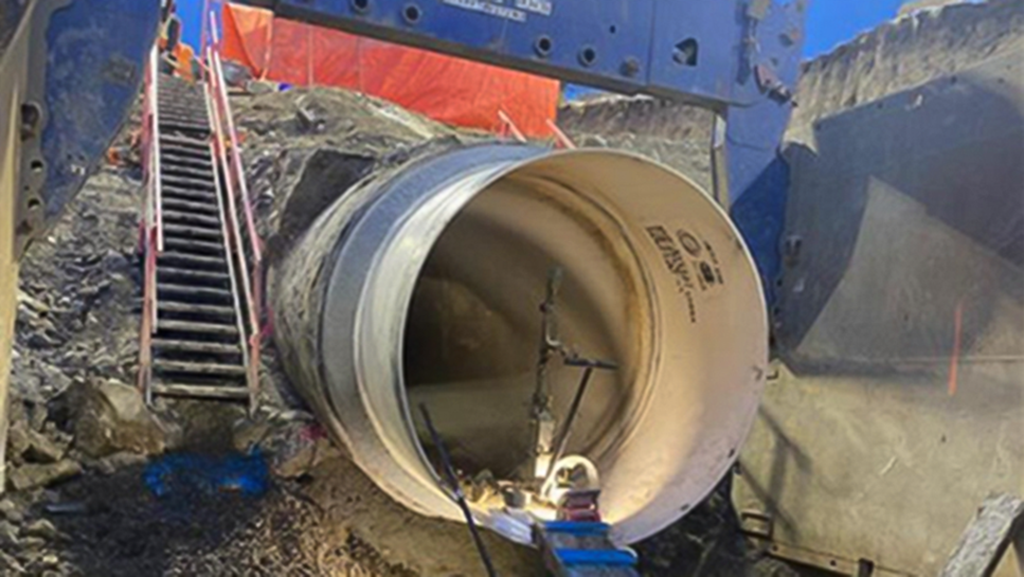
CALGARY, ALTA. — A report says Calgary’s catastrophic watermain rupture in 2024 wasÌýlargely theÌýresult of two decades of underinvestment and insufficient knowledge of the risk of pipe failures.Ìý
The report wasÌýreleasedÌýWednesday after months of work by an independent panel tasked with studying what led to theÌýburstÌýBearspawÌýSouth Feeder Main, which provides treated drinking water to 60 per cent of the city.Ìý
The breakdown led to months of water restrictions, and the issue returned to the spotlight last week after the watermain ruptured again, forcing a renewed round of restrictions in the city ofÌý1.6 million people.Ìý
The risk of disaster was traced back to 2004, when anotherÌýwatermainÌýfractured in the city. That break raised concerns for other parts of the city’s water system built with the same type of pipe, including theÌýBearspaw, the report says.Ìý
In the years that followed, it says, there wereÌýa number ofÌýprojects to assess and mitigate risks with theÌýBearspawÌýpipe, but they were put off inÌýfavourÌýof other initiatives.Ìý
“This pattern, which persisted over two decades, across multiple leadership teams and organizational structures, reflects systemic gaps in the waterÌýutility’sÌýapproach to managing critical infrastructure,â€� the report said.Ìý
The panel wrote that there were problems with the organizational chart, with no single executive solely accountable for water. Ìý
The lack of responsibility by any one manager, on top of the deferred inspections and monitoring, meant multiple eras of city council were also kept in the dark, the report says.Ìý
Panel chair Siegfried Kiefer told reporters that heÌýdoesn’tÌýthink blame should be placed on any individual or past city councils.Ìý
“We had management underinformed about the implication of their various decisions,â€� Kiefer said.Ìý
“Without the knowledge of the implications of those decisions, it’s difficult to put blame, if you will, on any specific decision.â€� Ìý
The report adds that CalgaryÌýisn’tÌýalone in struggling to keep up with necessary maintenance for water infrastructure, citing Statistics Â鶹´«Ã½Ó³» figures showing more than a quarter of watermains across the country are due for repair.Ìý
It says Calgary’s problem is unique, as its low population density means it has moreÌýkilometresÌýof pipe per resident than any similar-sized Canadian city.Ìý
Kiefer and the other five members of the panel recommend new processes forÌýidentifyingÌýand managing infrastructure risks across all city departments.Ìý
They also recommend a stand-alone water departmentÌýoperatingÌýas a municipally owned corporation, like Edmonton’s water utility provider Epcor.Ìý
Calgary Mayor Jeromy Farkas told reporters he was committed to implementingÌýall ofÌýthe report’s recommendations.Ìý
He said it was more important for council and city staff to use the report to bring solutions rather than analyzing the past to cast blame.Ìý
“Do we have a council and city administration who are willing to fund this and spend the political capital to fund the needed investment, but also to implement the needed accountability measures?â€�ÌýheÌýasked rhetorically.Ìý
“I strongly believe yes.”Ìý
CouncilÌýheardÌýWednesday that administration will come back with a plan of action for implementing the panel’s recommendations early next month.Ìý
With the second majorÌýBearspawÌýline rupture, residents have been asked again to takeÌýshorterÌýshowers and reduce toilet flushes and loads of laundry and dirty dishes.Ìý
On Wednesday, an emergency alert was issued for Calgary, saying water usage across the city had hit an unsustainableÌýlevelÌýand residents and businesses were called on toÌýimmediatelyÌýconserve water.Ìý
It was the third straight day that city officials said water usage was far above desired amounts. Farkas said he knows many are frustrated, but he urged Calgarians to step up conservation efforts. The line is expected to be fixed as early as next week.Ìý
“This is all about supporting each other asÌýneighbours, supporting our front line and supporting our first responders,” he said.Ìý
When asked by reporters ifÌýhe’sÌýdoing his part for conservation, he dramatically sniffed his armpit to laughter, saying, “I’ve been keeping my showers to three minutes or less.â€�
©2025 The Canadian Press




Recent Comments
comments for this post are closed