

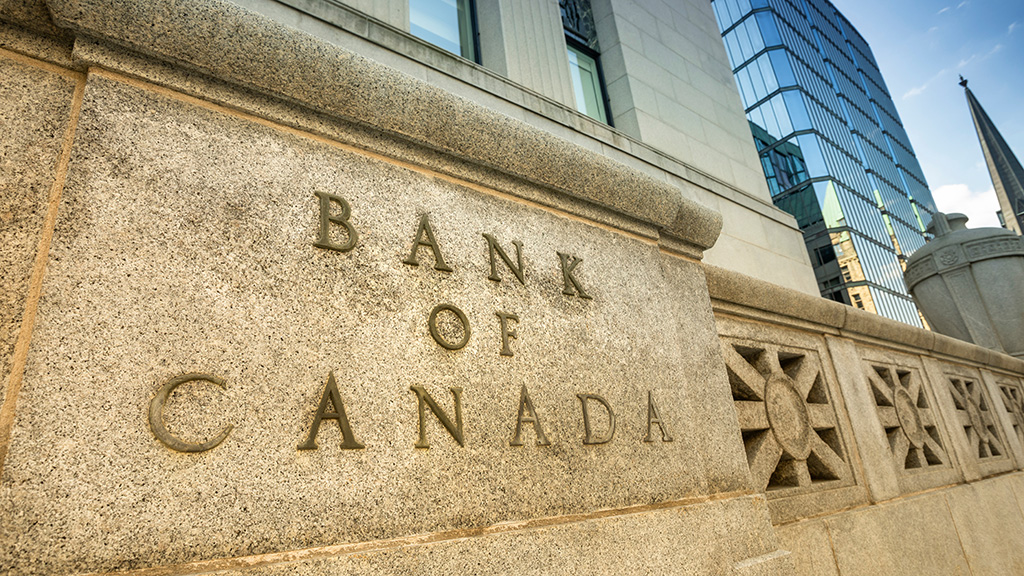
OTTAWA — The Bank of Â鶹´«Ã½Ó³» raised its benchmark interest rate for the first time in more than three years on Wednesday as it warned higher costs from the war in the Middle East are likely to spread.
The central bank’s policy rate now stands at 2.5 per cent following a quarter-point hike.
That key rate, which influences the cost of borrowing for banks, businesses and consumers alike, had held steady for nearly a year following a series of cuts.
The Bank of Â鶹´«Ã½Ó³» spent much of 2026 watching to see if higher global energy prices from war in the Middle East would spread to other parts of the consumer basket.
Inflation ticked up to 3.1 per cent in September — thanks again to high gas prices — with few signs inflation pressures were broadening.
But Bank of Â鶹´«Ã½Ó³» governor Tiff Macklem said in prepared remarks Wednesday that global oil prices are staying higher for longer and cost pressures are building. Businesses that have been absorbing costs from the global energy shock are increasingly likely to pass more of those costs on to their customers.
Macklem said the central bank’s governing council is increasingly convinced that consumers could soon feel the pinch beyond the gas pumps.
“With the outlook for inflation substantially higher and the economy showing resilience, an increase in the policy rate is needed to reduce the risk that elevated energy prices could spill over and become generalized inflation,� he said.
The Bank of Â鶹´«Ã½Ó³» now forecasts that annual inflation will hit 3.5 per cent by the end of this year. Inflation is expected to average three per cent next year — about a percentage point higher than its outlook published in July — before cooling to around its two per cent target by mid-2028.
The recent ramp-up in tariffs between Â鶹´«Ã½Ó³» and the United States is expected to drop real gross domestic product to 0.8 per cent in the fourth quarter, but officials at the central bank generally see more resilience in the economy than first expected.
The Bank of Â鶹´«Ã½Ó³» warned its projections are still subject to considerable uncertainty, particularly around the Middle East conflict and U.S. trade policy.
Macklem said the central bank will take its upcoming decisions “one meeting at a time� but also suggested future rate hikes are still in the cards.
“There could be a need to raise the policy rate further, but given the uncertainties, we will proceed carefully,� he said.
CIBC senior economist Andrew Grantham said in a note to clients Wednesday that he expects the Bank of Â鶹´«Ã½Ó³» to pause at its final rate decision of the year on Dec. 9 before delivering another quarter-point hike in January.
He said CIBC doesn’t expect the Bank of Â鶹´«Ã½Ó³»â€™s preferred measures of core inflation to accelerate as much as the central bank fears.
The Bank of Â鶹´«Ã½Ó³» did consider holding its policy rate steady at this meeting, Macklem said, because the rise in inflation has been narrowly concentrated around the energy price shock.
The central bank said it’s also seeing prices rise for some industrial inputs and technical equipment for the build out of artificial intelligence systems.
Tariffs and past weakness in the Canadian dollar are also driving up import costs, the Bank of Â鶹´«Ã½Ó³» noted in its outlook.
The bank is also expecting higher food inflation next year as rising energy prices move through the supply chain. It expects food inflation to average around four per cent in 2027, up about half a percentage point from this year.
Higher global energy prices also offer a bit of a boon to Â鶹´«Ã½Ó³»â€™s economy. Rising oil prices, combined with supportive fiscal policy, are expected to drive up business investment and support growth in the coming years.
The Bank of Â鶹´«Ã½Ó³» now sees real GDP growth of two per cent in 2027 and 2028, compared with one per cent in 2026.
The central bank’s outlook is more subdued for the housing market. Affordability constraints, slowing population growth and rising borrowing costs – fuelled in part by the Bank of Â鶹´«Ã½Ó³»â€™s own rate hike – are all expected to weigh on home buying and Â鶹´«Ã½Ó³» in the years ahead.
©2026 The Canadian Press



Recent Comments
comments for this post are closed