

Big changes are coming to a quiet residential corner of Vancouver’s east side.
After three years of planning and public consultation, Vancouver City Council has approved
The city says the plan will guide growth and change for the next 30 years around the Rupert and Renfrew SkyTrain stations.
Said the city in an announcement, “Developed in alignment with the Vancouver Plan, the (plan) focuses on supporting the development of new and diverse housing, job space, public spaces and cultural amenities, and includes a series of nature-based solutions to manage flood risk and improve ecological health around Still Creek.�
The plan will guide upcoming zoning changes, which are expected to be introduced later in 2025.
The plan covers a 6.6 square kilometre area, which makes it slightly larger than the area of the Broadway Plan.
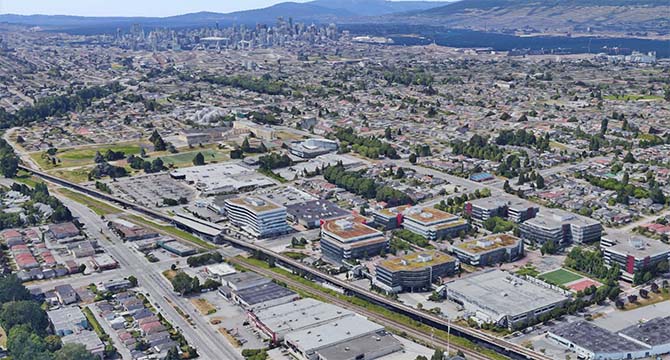
It calls for more than 10,000 new homes, which would increase the area’s population from 30,900 to 49,600.
Around 80 per cent of the households in the plan area live in single-family homes. Approximately 10 per cent of the housing stock is rental apartments.
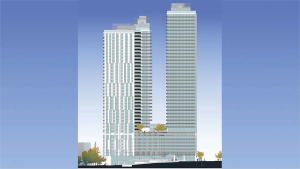
The highest-density developments will be concentrated around the SkyTrain stations. Towers from 29 to 45 storeys will include below-market rental housing and child care facilities.
Further away from the stations, buildings will range from 22 to 40 storeys, gradually reducing to mid-rise structures.
According to the plan, villages – clusters of shops and services supported by surrounding low-rise residential areas – will expand with new retail and services and a range of housing types, including buildings up to six-storeys and multiplexes.
Still Creek, one of only two salmon-bearing creeks remaining in Vancouver, runs through the area. Plans call for it to be enhanced, with portions of the creek corridor day-lit and expanded to reduce flood risk and improve local green space.
Rupert/Renfrew is close to the Brentwood Town Centre development in nearby Burnaby. Formerly a residential area of single-family houses and low-rise apartment buildings, the area is now one of highrise buildings, stores and offices.
Josh White, Vancouver’s general manager of planning, urban design and sustainability, says, “There has been very little growth-enabling planning done in East Vancouver. It was therefore time to correct that geographical imbalance.�
Since the plan was announced, a few development applications have come in the door.Â
“But nothing has been approved yet,� says White.
Erick Villagomez, a lecturer at the University of British Columbia’s School of Community and Regional Planning, says Vancouver area plans are complex in nature.
“This plan gets some things right,� says Villagomez. “The Rupert and Renfrew Station Area Plan tries to balance growth with repair of the environment.�
He says 45-storey highrise towers near transit “are OK, but hard to justify because they’re so carbon-intensive.�
“Also, much of the area is in the Still Creek floodplain, which restricts the ability to build underground parking for the towers,� says Villagomez.
The area plan includes incentives for below-market housing, but there is no guarantee it will actually get built.
“The plan treats most growth as coming from the private sector, but the private sector isn’t the only solution,� he says. “It is unpredictable and there should be more non-market housing.
“The area plan doesn’t contribute to long-term housing affordability. And it increases the tendency to gentrification of established affordable neighbourhoods.�
Although the plan anticipates $1.2 billion in amenity upgrades, it doesn’t identify where the funding for the upgrades will come from.
“There’s no guarantee the money will actually materialize,� says Villagomez.
Vancouver developer and retired architect Michael Geller says he is in favour of the plan, because it allows a broad mix of uses, at appropriate densities and building heights.
“I don’t have the same concerns with this plan as I have with the Broadway Plan, since it is not threatening the demolition of many older apartment buildings,� says Geller.
In addition, the neighbourhoods within the east side planning area don’t have the same history and character as such areas as Mount Pleasant and Kitsilano, which lie within the Broadway Plan.
“The city undertook a very comprehensive public consultation program, which allowed far more understanding and input compared to the Broadway Plan,� says Geller.
The Rupert and Renfrew Station Area Plan is one of several in Vancouver. The others are Cambie Corridor, East Fraser Lands (River District), Northeast False Creek and Jericho Lands.

Recent Comments
comments for this post are closed