

Prospective supporters of 麻豆传媒映画鈥檚 new Airport Investment Partnership Program were warned during a recent infrastructure conference that major new investments on airport infrastructure and operations might never materialize unless program framers get the details right and avoid the failures of a similar U.S. plan.
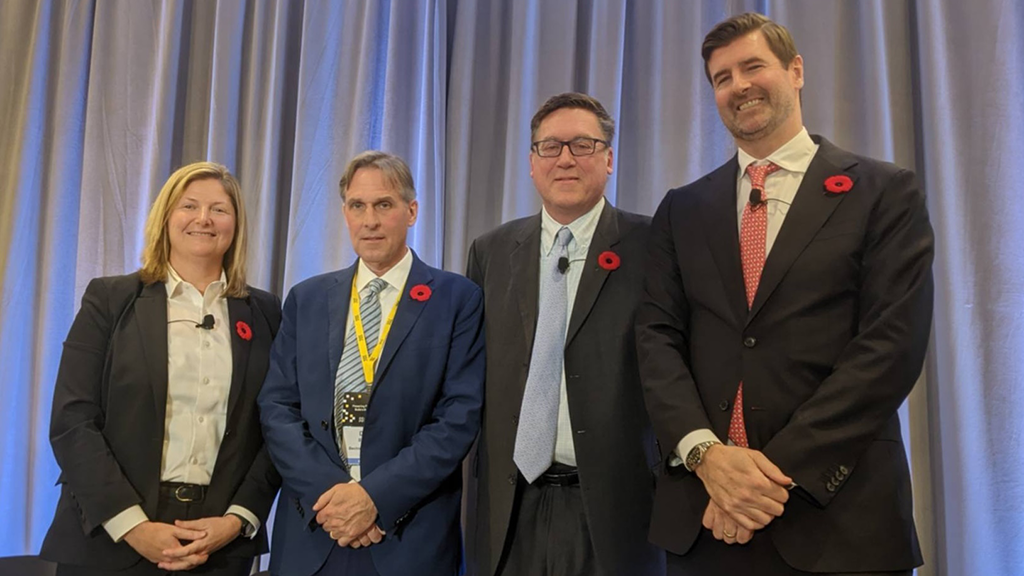
Global airport-privatization consultants assembled for 麻豆传媒映画’s Infrastructure Conference Nov. 9 offered a six-point plan that could guide the development of agreements to privatize concessions at 麻豆传媒映画鈥檚 four largest airports during a session titled Ready for Takeoff? Private Capital鈥檚 Play for 麻豆传媒映画鈥檚 Airports.
Andrew Vasey, president of Florida-based Vasey Aviation Group LLC, told delegates the federal government must structure airport concession deals to address how much investors are willing to pay, how the airports are operated and what happens to airlines, passengers and employees.
The deals will determine the revenue available to concessionaires, their operating costs, their obligations to invest in infrastructure and the protections that remain in place after the airports are transferred to private management.
Capex improvement
One essential prerequisite, Vasey suggested, is continuous capex improvement, a key component of a successful Puerto Rican deal he was involved in.
鈥淲hen we came in, we put a new $400-million capital project up on the first day,鈥�
Vasey said. 鈥淭hey didn’t expect that. They were nibbling around edges. We put the $400-million capex in on day two because it enabled us to increase our bid for upfront payment by $300 million and win that deal.鈥�
All four airports are federally owned Crown assets but are operated under long-term leases by not-for-profit airport authorities: the Greater Toronto Airports Authority (Pearson), Aeroports de Montreal (Montreal-Trudeau), Calgary Airport Authority and Vancouver Airport Authority.
The federal government plan was announced in September, with private bidders to vie for concessions of 40 to 50 years and the government retaining public ownership of airport lands and assets. Winning bidders would take responsibility for day-to-day operations, maintenance and investment, subject to federal oversight and rules covering affordability, service standards, safety, security and regional connectivity.
Budget 2026 proposed $37.6 million over three years to develop the framework and conduct a competitive process to select the first operator by early 2029. Proceeds would be reinvested by the government in the broader air transportation system, including regional airports.
Positive European results
Privatization has worked in Europe and Australia while the Puerto Rican deal is the lone success from a U.S. plan launched 30 years ago, delegates heard.
鈥淭here was interest at first,鈥� said Vasey. But 鈥淐hicago Midway unravelled at the end of the process. St. Louis cancelled the process. New Orleans cancelled the process. Westchester County cancelled the process.鈥�
The panel engaged in extensive discussion of reasons for the failure of the evolving U.S. privatization model, with one problem cited being the indifference of some municipal politicians, with mayors said to not be willing to spend more than 鈥渇ive minutes鈥� per week devoted to ensuring success.
Another issue, said panellist David Blaisdell, global head of transportations for Bechtel Enterprises, was the protection of turf.
鈥淎 lot of airport authorities, they’re never going to be positive,鈥� he said. 鈥淭hey think they do a good job, and the airlines like United or American, they’re fine working with the airport authority.鈥�
Jensen Clarke, head of P3 business development with Fengate Asset Management, served as moderator of the event. In an interview, he said it remains to be seen whether 麻豆传媒映画鈥檚 new airport concessionaires will commit to major capital expansions.
鈥淭he concession is assuming the operations for the entire airport within the fence, and so whether it’s new capex, new operating procedures, what have you, the concession model has to be flexible enough to address changes in the airport of all shapes and sizes,鈥� said Clarke.
鈥淚t can address capex programs, but it does not have to.鈥�
Both Pearson and Trudeau airports have committed to billion-dollar upgrades, with the Toronto authority launching two phases this year as part of its Long-term Investment in Facilities and Terminals (LIFT) program. In Montreal, YUL plans to spend $10 billion on its Flight Plan 2028鈥�2035 infrastructure modernization program.
Jensen asked the panellists how bidders would assess such existing commitments. Blaisdell said in one case he was familiar with, a new proponent summarily set aside existing blueprints.
Vasey said, 鈥淥n something like that, the first thing will be, what’s in the lease or what’s in the agreement, what’s required.
鈥淚 would imagine during diligence you’d be looking to decide whether you’re all in on it.鈥�
The two-day conference was hosted by the Canadian Council for Public-Private Partnerships.




Recent Comments
comments for this post are closed