

Most new planned city communities fail to achieve the qualities of older desirable neighbourhoods even though they employ the latest in planning best practices.
That’s according to Naama Blonder, who co-authored the book Building Charm with her business partner Misha Bereznyak.
The two founded Smart Density, a Toronto‑based architecture, urban design and planning practice. Their book rethinks how we build cities, summing up the philosophies of their company.
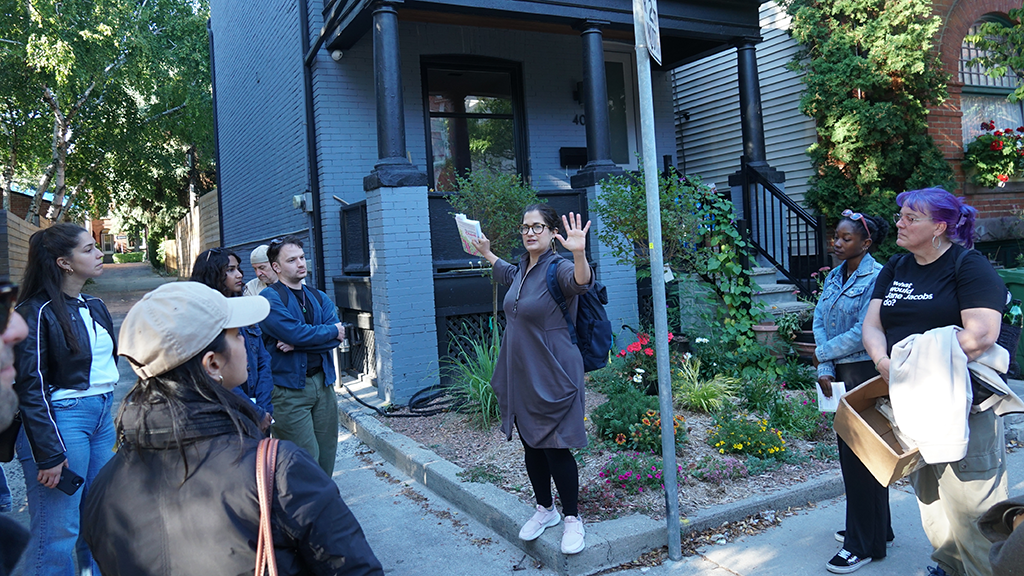
Recently, Blonder led a walking tour for architects, planners and others through Toronto’s Cabbagetown, Regent Park and the new community of West Don Lands.
She told those on the tour what makes a neighbourhood charming isn’t just good architecture.
The width of the streets plays a major role.
Siting homes close to the edge of Cabbagetown’s narrow streets is a major factor for why the Victorian neighbourhood is so desirable, she explained.
The qualities that make Cabbagetown successful, however, take a back seat in municipal planning today. “Our policies say things like ‘walkable and complete communities’ and then have standards that make them almost impossible to deliver.�
Engineering standards that focus on car culture largely dictate modern planning, Blonder said.
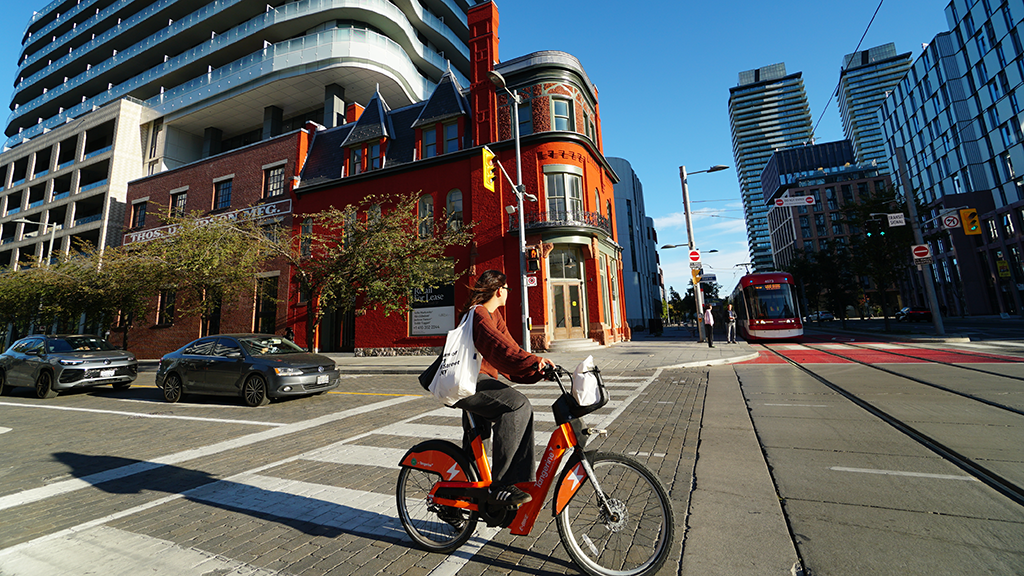
For example, new major streets are often up to 45 metres wide because they require two lanes for vehicular movement, two for parking and sometimes partial lanes for bicycles along with room for public transit.
Another point she raised is neighbourhoods have more allure and charm when streets are lined with lowrise buildings, up to four storeys high.
If higher density is a requirement, embedding highrise residential towers behind lowrise streets, rather than directly on them doesn’t undermine the character and warmth of the street.
A good example is the Distillery District where condo towers are “barely noticeable� because they are sited well behind lowrise frontage, she said.
Blonder also described a need for small “intimate public spaces� that offer a “distinct break� from their bigger setting as an important element in good neighbourhood planning.
They are often overlooked in modern developments, however, she said.
“Perhaps not enough developers and architects stop and question and debate the formula.�
In its first publishing run, Building Charm has proven to be a best seller on Amazon which Blonder believes is largely because of the book’s focus on “human scale design� – something most of us want from a neighboruhood.
“I think overall through the professional community and the industry it is being received very well.�
Blonder is optimistic cities across North America can and want to make positive changes to the built environment and she is hopeful the principles in her book will get to the right people.
To date, Smart Density has employed its design ideas for a lowrise-to-midrise neighbourhood masterplan in Toronto and Blonder sees more of its high-density principles implemented in time.
She said Cayala, a new neighbourhood in Guatemala City, Guatemala, is a prime example of a master-planned community designed to human scale with lowrise mixed-use buildings lining pedestrian-friendly streets.
Communities planned and designed along those principles are within reach as long as municipalities acknowledge their engineering standards stand in the way, Blonder added.





Recent Comments
comments for this post are closed