

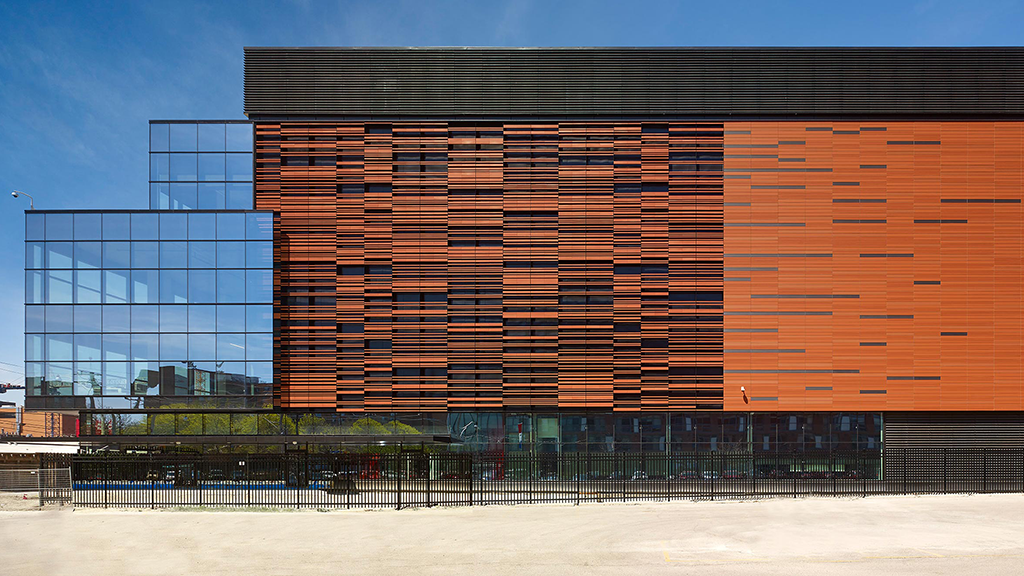
Data centres have been around for decades, but with the rapid growth of AI and cloud computing, the newest versions have come under scrutiny from the public and municipalities concerned about their impact on their neighbourhoods.
To help address concerns, Toronto-based WZMH Architects has been hosting a series of educational sessions for municipal planners and private-sector stakeholders on navigating the development process to successfully integrate data centres into urban environments.
WZMH has been involved in the design of numerous data centres, and Zenon Radewych, a principal with the firm, said there are several misconceptions about how they operate, including the use of large amounts of water for cooling.
While that is the case for facilities employing water-cooled chillers, centres using closed-loop air-cooled systems don’t require a continuous water supply, he said.
They are less energy-efficient, but they can eliminate the need for costly infrastructure such as watermains, pumps and piping to service a site.
Urban planning/design consulting firm Weston Consulting partnered with WZMH on a recent educational session, covering some of the concerns municipalities have about data centres.

Sandra Patano, partner and planning lead at Weston, said sometimes municipalities simply lack accurate information about how data centres operate to feel comfortable with the approvals process.
She said it is important for developers to be transparent about their projects, including common concerns around cooling systems and measures to mitigate noise from generators and other equipment.
Providing technical studies and supporting reports can help municipal planners better understand a proposal and assess its potential impacts, Patano advised.
Bryanne Robinson, senior planner for Weston, said a key consideration for developers early on is how to provide enough power to the site. Approval times can depend on the location, power needs and the power authority.
Weston is often involved in site selection and will conduct due diligence exercises early in a development.
Patano said working with municipalities that have approved data centres tend to be familiar with requirements for additional security, noise mitigation, accommodation of specialized equipment and parking space requirements, which are usually less than traditional building types.
Robinson said Weston has been monitoring the municipal landscape, where many cities are taking different approaches to development.
Mississauga and Oakville have created interim control bylaws that put a pause on data centre Â鶹´«Ă˝Ół» for one year, with a possible extension for a second year, she said.
The City of Toronto chose a different path conducting a city-wide study on the impact of data centres.
Robinson said many municipalities have a general policy framework for data centres, but those policies might need updating to provide specific definitions and zoning provisions tailored to the building type.
Among the misconceptions about data centres is the increased electrical energy consumption can be downloaded to local residents.
Patano said that has not been the case in Weston’s experience.
“Data centre operators are responsible for their own energy, cost upgrades,” she added, pointing out that even includes electrical substations on the property.
She said while the digital technology facilities get a bad rap for employing few workers, they do create Â鶹´«Ă˝Ół» jobs, employ maintenance and repair workers and they often serve as anchors for the growth of other businesses.
Another tangible benefit is the capture of waste heat to be used elsewhere.
WZMH is involved in a project west of Toronto where a small data centre will build a district energy plant to capture the waste heat for use in public buildings across the street.
Radewych said he expects data centres to thrive largely because of society’s reliance on digital technology.
Growing concerns around data sovereignty should also fuel demand, he added.
For municipalities to reject data centres “is dumb idea,” the architect said.
“We have to work with governments to allow them to be built in a responsible way.”
While the design of many data centres is driven by engineers, architects need to play a key role earlier in the design process to help integrate projects into communities, Radewych said.
“The problem in this industry is that data centres are seen as a high-tech mechanical-electrical problem and people forget about us (architects).”








Recent Comments
comments for this post are closed