

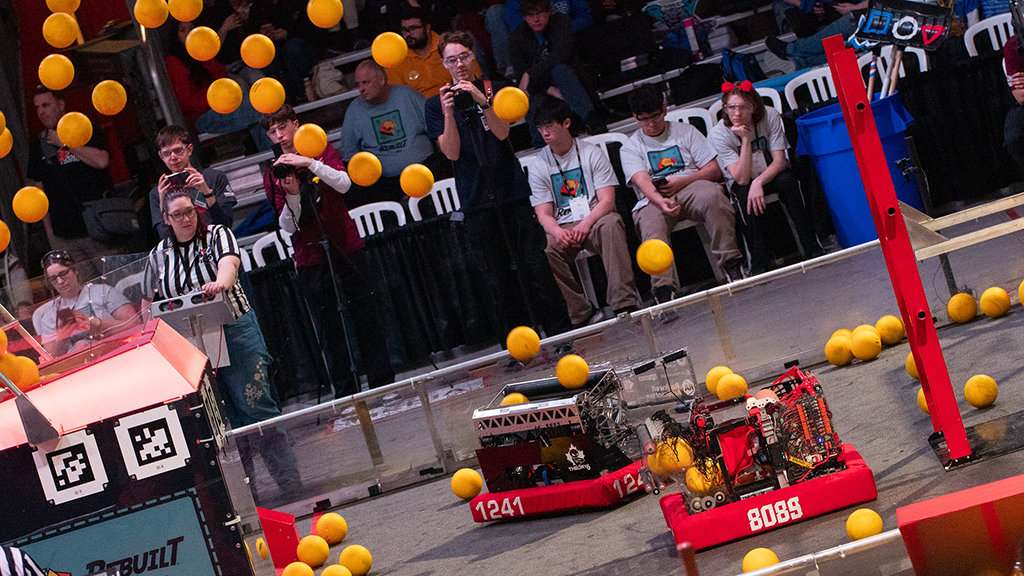
As a journeyman machinist with sheet metal experience and a long list of academic and industry achievements, Elizabeth Moses can trace her career back to when she joined her high school’s FIRST Robotics Competition team at 15 in 2013.
The competition is an international high school engineering program that challenges teams of students to design, program and build maximum 120-pound, industrial-sized robots to compete in a complex, fast-paced field game.
It’s operated by the international youth organization FIRST (For Inspiration and Recognition of Science and Technology) Robotics which also designs the games.
“I had never thought about a career in the trades before that,� says Moses, who credits her woodworking teacher for persuading her to join the team.
Now working in British Columbia, Moses graduated in 2016 from Assumption College High School in Windsor, Ont. and then enrolled in St. Clair College’s precision metal pre-apprenticeship the same year.
She became a registered machinist apprentice with Windsor Mold Group and graduated from the machinist apprenticeship in 2019.
Her experience and career trajectory is an example of how the competition can introduce students to the skilled trades, says Dave Ellis, president of FIRST Robotics Â鶹´«Ã½Ó³».
Incorporated in 2004, FIRST Robotics Â鶹´«Ã½Ó³» is a registered charity whose mission is to provide “life-changing robotics programsâ€� to young people. The charity is financially supported by the Ontario ministries of labour and education and corporate sponsors, says Ellis.
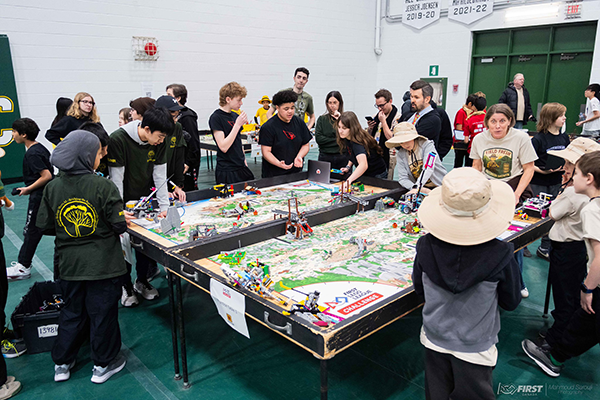
It fulfills that mandate by offering three different programs: FIRST LEGO League; FIRST Tech Challenge; and the FIRST Robotics Competition, which Moses participated in.
Targeted towards children aged six to 14, FIRST LEGO League helps them explore Science Technology Engineering Mathematics (STEM) concepts. Those students design, build and program small robots to perform FIRST games on a small playing field.
Qualifying tournaments take place in November and December, followed by a provincial championship in January and the World Championship in Houston Texas in April.
Open to students in Grades 7 to 12, the FIRST Tech Challenge focuses on designing, building and programming medium sized robots to perform a few repeatable tasks on a 12-by-12 foot playing field, he says.Â
Specifically targeted to high-school students, the FIRST Robotic Competition challenges teams to design, build and program maximum 120-pound robots that can execute a number of games on a playing field roughly the size of a basketball court. The instructions are released in January and the games change each year.
Although the robots can be fully customized, there are certain prescribed electrical components that have to be incorporated, says Ellis.
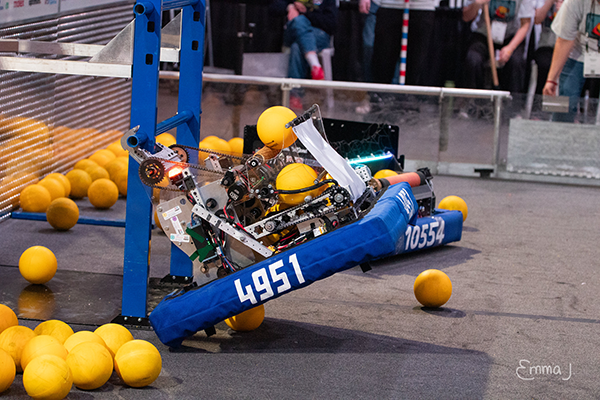
Similar to the other divisions, the FIRST Robotic Competition members participate in a series of qualifying tournaments and then go onto the provincial championship and, if they qualify, progress to the World Championship in Houston.
There is more than a dash of excitement and a competitive spirit at those games. But they have a serious purpose as they’re intended to shed light on possible path into STEM careers, says Ellis.
Not all the elementary and secondary students who participate in the games go on to careers in those fields, he says.
“But the transferrable skills they develop such a team building, planning and fundraising, can help them enter other careers.�
Although teams can be organized by various organizations or even individuals, the majority are sponsored and run by schools.
This can put an extra workload on teachers, but often the process of designing, programming and building the robots can be incorporated into the curriculum, says Ellis.
Certainly at the Humberview Secondary School in Bolton, Ont., four teachers are actively engaged in the operation of the school’s award-winning team, the Alpha Dogs.
“We have 50 students, 10 alumni and couple of coaches,� says Becky Krauter, a mathematics teacher who serves as the team’s liaison co-ordinator and mentor for the business and media sub-team, one of Alpha Dogs’ four divisions.
One of those coaches is an electrical engineer who devotes his own time helping the team master the electrical challenges involved in creating the robot.
As soon as the Alpha Dogs receive an animation video and a 120-page procedural manual in January, the design, build and program process moves into high gear, says Krauter.
Most of the work is conducted at the high school. However, about four weeks before the qualifying championship gets underway, team members build a training field in a heated barn provided courtesy of the local fair board, she says.
The team has participated in the World Championship seven times, winning a number of awards. At this year’s event, the team was the Excellence in Engineering Award winner and achieved an overall rank of fifth out of 3,000 teams.
Besides its backing of the Alpha Dogs, the high school also hosts a small FIRST Tech Challenge team as well as sponsoring and providing the venue for a FIRST LEGO group which meets at school two nights a week and on Saturdays.
The intent is to encourage those elementary schools to consider joining the Alpha Dogs if they enrol in Humberview.
“We’re building a pipeline,� says Krauter.








Recent Comments
comments for this post are closed