

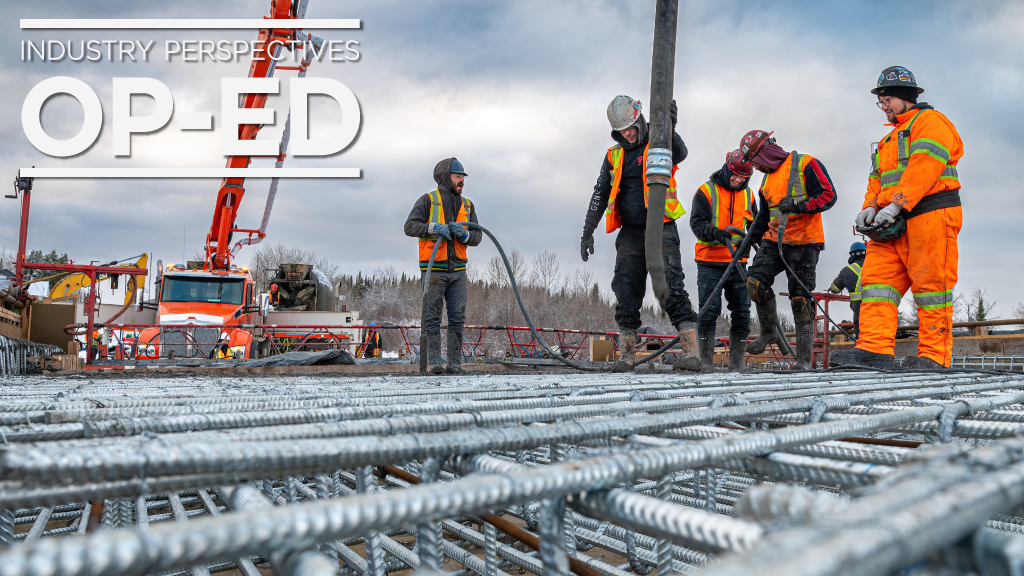
The best public policy does more than read well on paper.
It changes what workers experience when they arrive on a jobsite, gives more people a pathway into a rewarding career and ensures the men and women building our province are treated with the dignity and respect they have earned.
That is the standard by which leadership in labour should be measured, and it is what David Piccini understood throughout his time as Ontario’s minister of labour, immigration, training and skills development.
Piccini approached the portfolio with energy, conviction and a willingness to listen. He did not treat engagement with labour as a formality. He came to our training centres, met directly with workers and apprentices, heard from women building careers in the trades and listened to the people whose experience on jobsites should inform the decisions made at Queen’s Park.
Most importantly, he acted.
Through successive Working for Workers legislation, Ontario advanced practical measures focused on dignity, safety and inclusion in the workplace. Cleaner and more sanitary washrooms on Â鶹´«Ã½Ó³» sites, properly fitting personal protective equipment and stronger protections for workers may appear straightforward, but they address issues that affect people every day. They send a clear message that basic dignity is not negotiable and that every worker deserves to return home safely at the end of a shift.
Our work together also focused on opening the doors of the skilled trades more widely. Ontario’s future depends on building a workforce that reflects the province itself; women, youth, newcomers, Indigenous workers and people who may never have seen the trades as a place for them.
Through the Skills Development Fund, investments in union-led training and apprenticeships helped connect more people with the skills, mentorship and real jobsite experience needed to build lasting careers. They transformed lives.
For LiUNA, training is not an abstract commitment.
Across our 18 training centres in Ontario, we see what happens when workers are given access to mentorship, modern equipment and a clear pathway to opportunity.
They do not simply gain a job.
They build a career, support a family and contribute to the strength of their community.
Piccini and the Doug Ford government recognize the skilled trades are not a second choice they are a first-class career and an essential part of Ontario’s economic future.
Progress is built through honest conversations, mutual respect and the willingness to stay at the table.
Piccini brought that approach to the labour portfolio. Together, we advanced policies that will continue to shape safer, more inclusive workplaces and create opportunities for workers for generations to come.
Now, as minister of infrastructure, he has an opportunity to see that policy translate directly onto job sites across the province.
Ontario is undertaking a historic infrastructure agenda. Transit, hospitals, highways, water and wastewater systems, energy infrastructure, housing-enabling projects and community facilities will determine how our province grows and competes for decades. These investments are not simply lines in a budget.
They are jobsites, careers and paycheques. They are opportunities for apprentices to earn while they learn, for experienced tradespeople to pass on their knowledge and for working families to build secure futures.
Piccini now brings something especially valuable to this work, a direct understanding of the people who will build it.
He knows infrastructure policy and labour policy cannot operate in silos. Announcing a project is only the beginning. Delivering it requires a skilled, safe and well-supported workforce. It requires early workforce planning, sustained investment in training and procurement that recognizes the value of union labour, high standards and local economic benefit.
It also requires a government that measures success not only by how much concrete is poured, but by the quality of the opportunities created along the way. And that is the Ford government.
LiUNA’s more than 120,000 members across Ontario are ready to build. They are constructing the transit networks that connect communities, the water systems that support new housing, the roads and bridges that move people and goods, and the energy projects that will power future growth.
With Piccini at infrastructure, the principles advanced during his time at labour including safety, dignity, inclusion, training and opportunity can now be embedded in the projects reshaping our province.
As this chapter begins, so too does a new one at the Ministry of Labour, Immigration, Training and Skills Development.
We welcome Trevor Jones to a portfolio that carries profound responsibility. Ontario is growing, demand for skilled workers is intensifying and the nature of work continues to evolve.
Protecting today’s workers while preparing the next generation will require focus, partnership and the courage to keep moving forward. We are confident that with Jones at the helm, Ontario’s workers will continue to have a strong voice and a committed partner at the table.
There is important work ahead as we work collaboratively to strengthen health and safety, expand access to apprenticeship and union-led training, remove barriers that keep people from the skilled trades, supporting workers’ mental and physical well-being and ensuring that growth creates good, family-supporting careers.Â
LiUNA looks forward to working with Jones and the newly appointed cabinet with the same direct and constructive approach we bring to every partnership. We will continue to advocate fiercely for our members, bring solutions to the table and ensure the voices of workers are present wherever decisions about their futures are made.
Because whether we are shaping policy or building infrastructure, the true measure of progress is the people we empower and the possibilities we create along the way.
Victoria Mancinelli is director of public relations, marketing, strategic partnerships and government relations with LiUNA.
Send Industry Perspectives Op-Ed comments and columns ideas to editor@dailycommercialnews.com







Recent Comments
comments for this post are closed