

As a new generation of major projects emerges with the potential to transform Â鶹´«Ã½Ó³»â€™s economic landscape, delegates attending a recent Canadian Construction Association conference in Toronto heard there’s a new urgency driving the nation’s engineers, designers and contractors to rethink established approaches and develop better ways to build.
John Gamble, president and CEO of the Association of Consulting Engineering Companies – Â鶹´«Ã½Ó³», set the tone during a session on national Â鶹´«Ã½Ó³» policy at the CCA’s Best Practices in Construction Symposium, arguing a new culture must take root as new procurement models are refined.
“To embrace these new models, we need to embrace the knowledge base both within the industry and amongst the client community,� said Gamble in an interview after the panel discussion.
“We need to increase the knowledge base within that. It’s a shared challenge. To do that, we need to invest in putting the right people in the right positions, both in terms of the knowledge and the culture and the right mindset. And I think that will cultivate the climate you need to make meaningful approvals reforms.â€�
Defining the challenge
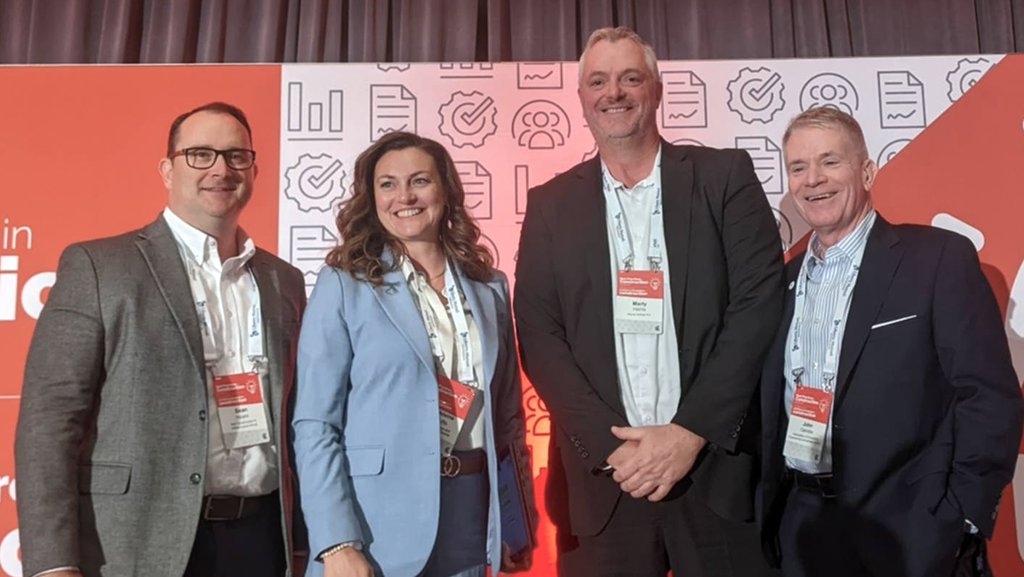
The session also featured Madeleine Plouffe, senior director of the National Infrastructure Contracting Directorate, Public Services and Procurement Â鶹´«Ã½Ó³»; Marty Harris, SVP with Aecon; and Sean Hoare, SVP with Aon, serving as moderator.
“Everybody agrees with the challenge,â€� said Gamble. “It’s how do we overcome, shall we say, the cultural inertia that we all have shared responsibility for, and take a fresh approach.
“What the government’s hoping to accomplish with the massive spending, the status quo is not going to work anymore. I think we’ve come to the collective realization that 10 to 15 years to approve a major nation-making building project is not good enough. So I’m gratified to see the sense of urgency.â€�
Plouffe said the federal government has entered a learning phase and is moving towards more national consistency, which she said means more oversight and a more centralized, templated approach to procurement from region to region. The tighter timeframe for approvals of major projects means reducing duplication and regulation.
“It’s more about operationalizing the policies that already exist and not adding more and more policies and regulations,� she said.
Need ‘best and brightest’
Gamble said his association had recently met with staff of the Prime Minister’s Office to discuss Bill C-39, which will incorporate project approvals reforms.
Gamble said to speed up approvals but still ensure there is necessary oversight, the PMO is committed to assigning “some of the best and brightest across government� to approve major projects.
“I don’t believe there necessarily needs to be a correlation between how quick the approvals are and how robust they are,â€� said Gamble. “I do believe there’s an opportunity to get projects approved more quickly without giving ground to the sustainability, the community and all the other requirements these projects are in fact intended to address.â€�
Harris suggested one solution to the approvals logjam would be to move towards a “deemed approval� approach. Sometimes, he said, a project is moving through an approvals cycle, the client is committed to going ahead and the funding is in place, with all parties onside, but the process is abruptly interrupted by an approvals requirement.
Harris said the answer could be to flip the process on its head, with the Major Projects Office saying, “‘The answer is going to be yes, but with some caveats to it,’ as opposed to, ‘let’s figure out ways to slow this down.’â€�
Later in the session, in response to a question from Hoare on whether Â鶹´«Ã½Ó³» has the capacity to handle a robust new pipeline of projects, Gamble said Â鶹´«Ã½Ó³»â€™s engineering sector is among the top five in the world, with four of the top 20 consulting engineering firms headquartered in Â鶹´«Ã½Ó³». But a gap could develop if governments keep writing or rewriting legislation.
“It’s much easier to pass a budget than to educate and train an engineer or technologist, and so we’re afraid that that gap could open in time without some concerted effort,â€� he said.
Harris said a larger problem than capacity is uncertainty. Firms can plan to have the required staff and expertise if they know what projects are proceeding years in advance.
“If we don’t know what the pipeline is, if we don’t know what the needs are two, three, four, five years out, then it’s hard for us to then bring on new people, bring on new trades,â€� he said.








Recent Comments
comments for this post are closed