

As 麻豆传媒映画鈥檚 consulting engineers increasingly embrace Artificial Intelligence, could the industry be unwittingly advancing ever closer to a major project failure, with potentially profound consequences?
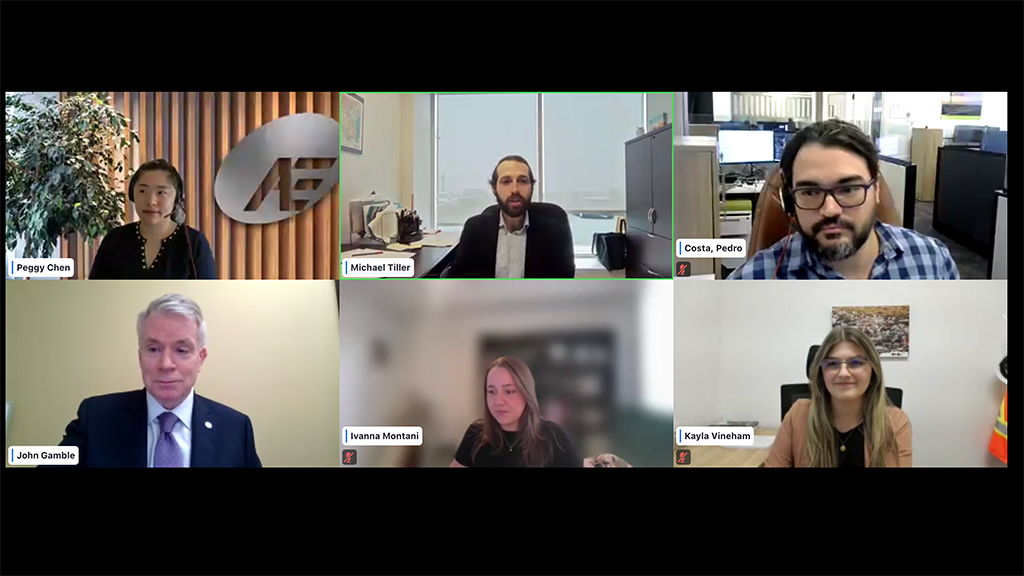
The possibility was raised during a lively webinar hosted by the Association of Consulting Engineering Companies 鈥� 麻豆传媒映画 (ACEC) to mark National Consulting Engineering Day May 26.
Four panellists, all emerging practitioners in the sector, discussed the opportunities and potential pitfalls of AI and also explored such topics as preserving essential professional knowledge as leaders retire as well as addressing the continuing recruitment problem.
The session was billed as Shaping Our Future.
Managing tech reliance
Ivanna Montani, geotechnical engineer at KGS Group, was one of several panellists to warn viewers about the dangers of over-reliance on technology such as AI without adequate professional oversight.
She described a profession where budgets are shrinking, funding is being reduced, resources are scarce and there is a shortage of professionals coming into the field, resulting in higher stress on consulting engineers.
鈥淚’m going to say this out loud, we are living in a generation where we’re at very high risk of an engineering failure associated with the use of AI on projects, and I wouldn’t be surprised,鈥� said Montani.
鈥淥ne of the bigger challenges is going to be managing that reliance on technology鈥 don’t think it will ever replace the engineer, but I think it needs to be a very intentional, again, approach of integrating that into our work, specifically on the technical side, in a way that is healthy and that is productive.鈥�
Panel moderator Michael Tiller, a structural engineer at Tiller Engineering and chair of ACEC鈥檚 Future Leaders Network, added as engineers face talent crunches and time restraints, AI can seem like a 鈥済odsend,鈥� but if it’s not being verified, it introduces significant potential risk.
Panellist Peggy Chen, a civil engineer at Associated Engineering, was one of several contributors who suggested AI should be used as one tool among several and not as a foundation of an engineer鈥檚 work. If AI is used in designs and a project goes wrong, she asked, where is the accountability?
鈥淚’d like to start by saying that AI scares me,鈥� said Chen.
鈥淲e need to know the process, and at each step what went into it. So I’m cautiously optimistic that this is something that will be helpful, but we do need to be careful.鈥�
Kayla Vineham, a civil/structural engineer-in-training at CIMA+, linked AI use with the professional development of young engineers. Every firm has senior leaders with decades of accumulated knowledge but often it is poorly transferred to the next generation.
鈥淚 know with developing AI, I can see that coming into play a lot. I think in the future of consulting, for knowledge transfer and things like that鈥ocumentation, documentation, documentation is very, very important,鈥� said Vineham.
鈥淚t鈥檚 important that we’re documenting everything as we go through, so that the young grads, the younger generation coming up, have something to reference.鈥�
Montani and Tiller noted AI is used to automate some of the mundane tasks that junior engineers used to do, such as taking meeting minutes, writing field inspection reports and drafting a report 鈥� the younger engineers used to 鈥渃ut their teeth鈥� with these tasks, Tiller said, and that learning experience where they absorb the details of projects risks getting lost.
It has always been a valuable way for them to interact with senior engineers, Tiller said, but it is now being outsourced to technology.
鈥淵ou’ll never be able to build those skills by reading a textbook, or by prompting a ChatGPT question,鈥� said Montani. 鈥淚 think you’ll be better developed as a professional around it if you try to seek that knowledge from people that have been around in industry for a long time and have the experience to provide that to you.鈥�
Basic pillars
Montani said the discussion of AI use must fall back on the basic pillars of engineering, such as taking responsibility for projects and working with integrity.
鈥淗ow we incorporate that, I think it’s going to drive a lot of innovation in the next couple of decades,鈥� she said.
Chen said consulting engineering is at its core a 鈥減eople business,鈥� and she is optimistic about the future when she sees new talent with extensive technology skills joining the profession.
鈥淭he diversity that we’re now seeing in the pool of great talent is very exciting to me. So different perspectives, different experiences that can get brought in, and just enrich our industry,鈥� she said.







Recent Comments
comments for this post are closed