

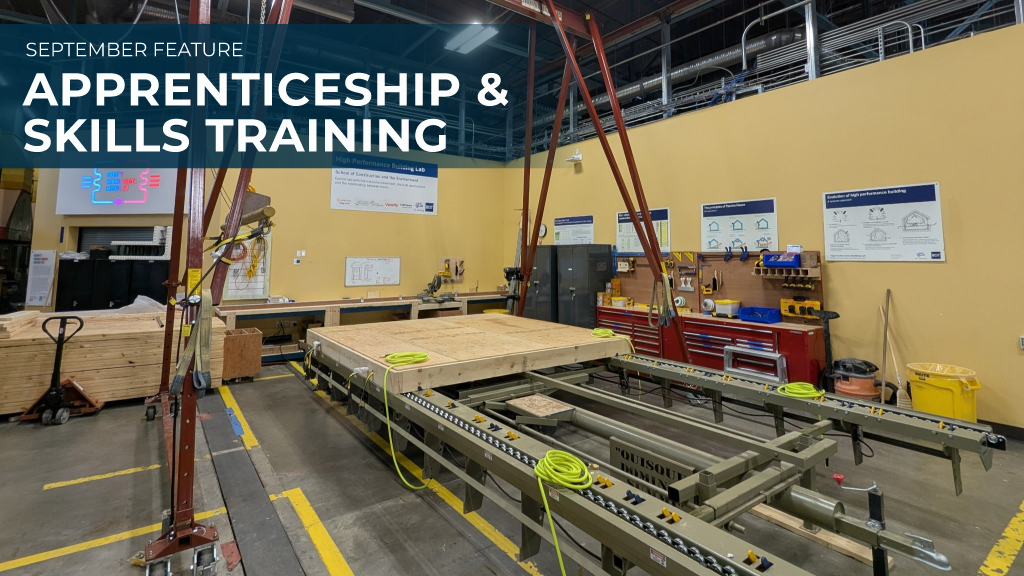
The British Columbia Institute of Technology (BCIT) is setting up a prefabrication teaching micro-factory on its Burnaby campus.
The micro-factory will provide hands-on training in modern methods of 麻豆传媒映画, especially high-performance, low-carbon buildings.
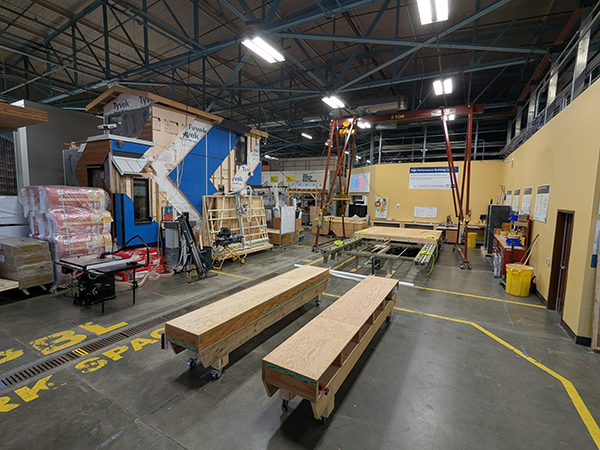
Alex Hebert, director of the says the micro-factory will simulate a small-scale production environment where students, industry partners and Indigenous communities can learn such manufacturing principles as lean production, quality assurance and repeatable 麻豆传媒映画 processes.
The micro-factory will support the development of prefabricated wall assemblies and integrate building science, air-tightness, energy efficiency and Passive House best practices.
The project will also be a demonstration and training hub to help accelerate the adoption of off-site 麻豆传媒映画 across B.C.
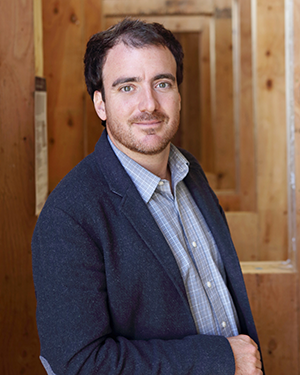
鈥淥ur factory exists and is up and running,鈥� says Hebert. 鈥淚t is currently focused on teaching how to make prefab wall assemblies for net-zero homes. 鈥淚t is a first in B.C., and I have never heard of something like that elsewhere in the world, so perhaps (it is) a first globally, very likely a first in 麻豆传媒映画.鈥�
Hebert says the goal of the project is not to build a highly automated factory.
鈥淚nstead, we want to demonstrate a small, affordable, replicable model of prefabricated 麻豆传媒映画 that uses practical manufacturing principles,鈥� he says.
鈥淭he model should be achievable by smaller builders and, importantly, by rural, remote and Indigenous communities that want greater control over how their housing is produced.鈥�
The micro-factory is currently located at BCIT鈥檚 .
鈥淭his is its temporary home and provides an opportunity to get the concept operational quickly using existing BCIT infrastructure,鈥� says Hebert.
鈥淩ather than waiting for an ideal facility before teaching, BCIT can begin developing the factory workflow, testing equipment and processes, training instructors, delivering curriculum and working with our first students and client.鈥�
BCIT鈥檚 first micro-factory demonstration project is with a First Nation client from a remote part of B.C.
Hebert says the germ of the idea for the micro-factory originated with the First Nation, after which the idea was put into action in a collaboration between it and BCIT.
鈥淭he project is an ideal opportunity to demonstrate what the micro-factory is intended to accomplish,鈥� says Hebert. 鈥淚t combines real 麻豆传媒映画 with real training, while helping to build capacity within a remote Indigenous community.鈥�
The educational component is being developed as a three-course micro-credential.
The working name for the micro-credential is Prefabricated Construction Workforce Foundations.
There are three courses in the micro-credential.
An introductory course covers the principles of off-site 麻豆传媒映画, the fundamentals of net-zero design, factory safety practices, quality assurance and collaborative production workflows.
Manufacturing of Panelized Building Components is a hands-on course that gives learners practical experience in manufacturing prefabricated, high-performance wall panels in a small-scale factory.
The final course, Site Assembly and Project Coordination for Prefabricated Buildings, gives a practical understanding of the planning, co-ordination, site preparation and onsite assembly of prefabricated buildings.
Four First Nations students are in the first intake.
Hebert says the next step is to relocate the teaching micro-factory to a permanent home at BCIT.
The proposed facility is a semi-outdoor space roughly 2,500 square feet in area, with a wooden floor, a roof and storage container.
鈥淥ur longer-term ambition extends beyond BCIT’s Burnaby campus,鈥� says Hebert. 鈥淎 fundamental part of the project is Indigenous community capacity building. As part of our commitments, BCIT will visit at least two remote Indigenous communities and bring this equipment knowledge closer to the places where the housing challenge actually exists.鈥�
Hebert says the project will help communities develop the knowledge, skills, systems and confidence to take a greater part of their housing future into their own hands.
鈥淭he micro-factory is therefore as much about people and capacity as it is about buildings and equipment,鈥� says Hebert. 鈥淎 prefabricated wall panel coming out of the factory is valuable, but the greater outcome is someone understanding how and why that panel was designed and built, how to reproduce it consistently, and how those skills can contribute to future housing projects in their own community.鈥�
The micro-factory project is being supported by (C2R2) through funding received from Employment and Social Development 麻豆传媒映画.
Cebert Adamson, C2R2 steering group co-chair, says people in rural and remote Indigenous communities deserve good houses.
鈥淭hey should not have to choose between affordability, durability, comfort, energy efficiency and quality,鈥� says Adamson. 鈥淲e want to demonstrate that homes can be affordable while also being comfortable, healthy, resilient, and capable of achieving net-zero or Passive House levels of performance.鈥�





Recent Comments
comments for this post are closed