

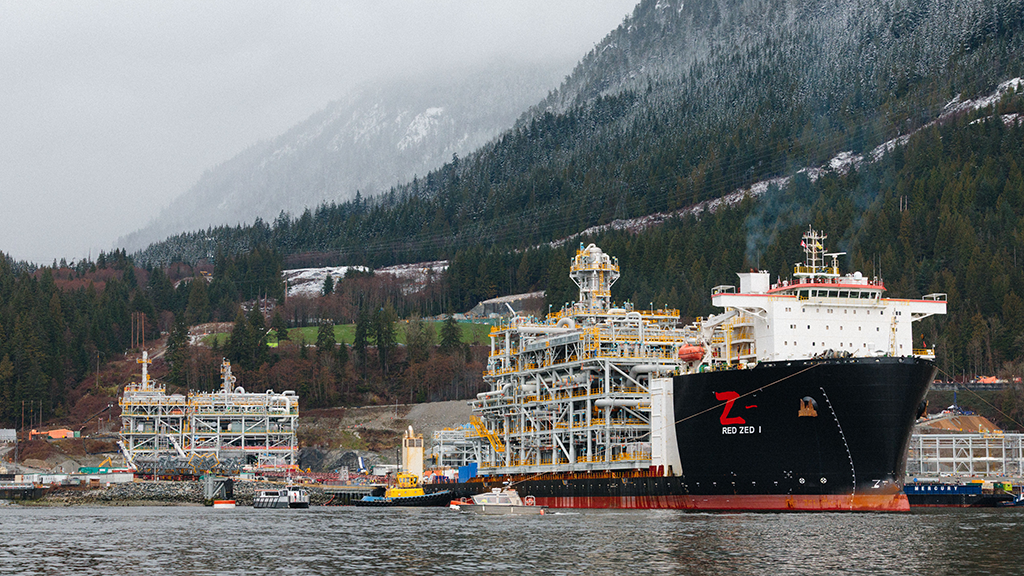
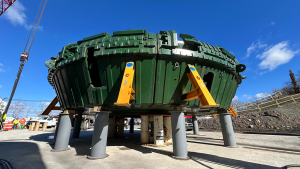
SQUAMISH – One of the most important pieces of the is now onsite as the liquefaction module arrived aboard the specialized heavy cargo vessel Red Zed 1 earlier this week.
The liquefaction module is the 15th module to arrive as the project moves closer to Â鶹´«Ã½Ó³» completion.
Weighing 10,847 metric tonnes, the liquefaction module is the heaviest to become part of the facility. Occupying a footprint roughly the size of a football field, it is also among the largest, a release reads.
“The liquefaction module is the beating heart of our facility. It’s the core of how we will transform B.C. natural gas into LNG to be shipped around the world,â€� said Luke Schauerte, CEO of Woodfibre LNG, in a statement. “As the world’s first LNG export facility using renewable power for electric-drive liquefaction, this module represents the core of our commitment to net-zero operations and setting a new standard for LNG, both in Â鶹´«Ã½Ó³» and around the world.â€�
Once installed and commissioned, the module will cool natural gas to approximately -162°C, compressing it into an energy-dense liquid so it can be shipped overseas, the release describes.
Woodfibre LNG’s liquefaction design also uses Siemens electric-drive (E-drive) motors.
In most conventional LNG facilities, the liquefaction process is driven by gas turbines operating off feed gas, creating greenhouse gas (GHG) emissions, states the company.
By using E-drive technology connected to BC Hydro’s renewable power grid, Woodfibre LNG eliminates the single largest operational source of GHG emissions in LNG facilities.
All 19 modules of the Woodfibre LNG facility are expected to be onsite this spring. Construction is scheduled to be completed in 2027.


Recent Comments
comments for this post are closed