


OTTAWA — In advance of new and escalating Â鶹´«Ã½Ó³»-U.S. counter-tariffs the Canadian Construction Association (CCA) has released a bulletin outlining what segments of domestic Â鶹´«Ã½Ó³» will be likely be hit hardest and the supports available to the industry.
“The bottom line for our industry, Â鶹´«Ã½Ó³» is a net importer of critical materials, and this list hits hard,â€� the CCA bulletin states.
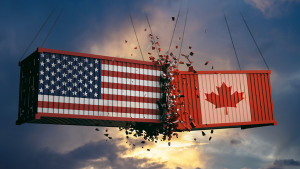
On Aug. 25, in a direct response to the 50 per cent U.S. tariff on Canadian exports, Â鶹´«Ã½Ó³» announced dollar-for-dollar counter-tariffs on $27.6 billion in U.S. goods. These measures take effect Sept 8. CCA warns that this trade war and its escalation will “cause significant disruption across Canadian job sites, delaying projects and raising costs. Ultimately, they will hinder Â鶹´«Ã½Ó³»â€™s ability to build the infrastructure, housing, and trade corridors our economy needs.â€�
The following are expected impacts:
- Steel and aluminum: Tariffs on structural and derivative products are doubling from 25 to 50 per cent
- Lumber and wood products: Plywood, LVL, and sawn wood are facing 25 to 50 per cent tariffs
- Dozens of specific Â鶹´«Ã½Ó³» inputs: Fasteners, HVAC equipment, scaffolding, doors/windows, lifting machinery, and more, will be hit with rates from 15 to 50 per cent.
“Based on the latest supply and use data from 2024, only 60 per cent of all manufactured inputs used in Canadian Â鶹´«Ã½Ó³» are sourced domestically, while 25 per cent are supplied U.S. producers. Exposure to U.S. imports is particularly high in engineering Â鶹´«Ã½Ó³», including communication and oil and gas subsectors, where roughly 40 per cent of inputs come from the U.S., exceeding the domestic share,â€� notes the association. “Reduced exports may free up capacity, but Â鶹´«Ã½Ó³» still does not produce every type of steel the Â鶹´«Ã½Ó³» industry needs to avoid raising cost on products that cannot be sourced domestically. The federal government is providing tariff relief for 179 steel mill products not produced in Â鶹´«Ã½Ó³». The carve-outs help contain the most acute self-inflicted costs of counter-tariffs.â€�
The Canadian government has announced an additional $7.5 billion support package, on top of the $25 billion in economic support since the trade dispute began. These measures are not all direct grants to businesses: they include loans, regional financing, worker support programs, and funding for business adaptation projects. Eligibility, availability and application processes vary by program, and complete implementation details have not yet been released for every measure.
The association summarized some of the key measures:
- An additional $1.5 billion for the Regional Tariff Response Initiative for small and medium-sized businesses (SMEs) to help manage tariff-related pressures.
- An additional $2 billion channeled through the Â鶹´«Ã½Ó³» Strong Diversification Fund, including increased collaboration with Â鶹´«Ã½Ó³»â€™s regional development agencies (RDAs), programming for project intake and triage.
- Introducing a new suite of $3.5 billion for the Rapid Response Supports for Workers and Employers Initiative. Measures include extended and additional employment insurance temporary flexibilities, enhancements, and training opportunities made through Job Bank.
- Increased flexibility added to the Large Enterprise Tariff Loan facility, which is housed under the Â鶹´«Ã½Ó³» Enterprise Emergency Funding Corporation (CEEFC), allowing for more liquidity support from 24 months to 36 months.
- An additional $500 million to the liquidity stream under the Business Development Bank of Â鶹´«Ã½Ó³»â€™s Pivot to Grow Program to alleviate cash-flow pressures, starting at $250,000 to $5M.
CCA also reminds its members and Â鶹´«Ã½Ó³» at large that tariffs could impact individual projects differently depending on specific contractual language. The Canadian Construction Documents Committee (CCDC) previously published , which provides guidance on contractual considerations related to tariff-driven cost changes.
“Members are encouraged to review the bulletin alongside their contracts when assessing potential exposure and to have timely and candid discussions with their project partners about tariff impacts,� says CCA.






Recent Comments
comments for this post are closed