

Two prominent Texas universities are planning major expansions with their eyes firmly set on the future.
As Texas Southern University (TSU) in Houston prepares for its centennial next year, it has announced a valued at $1.7 billion, establishing a framework for campus development, facility improvement, enhanced learning delivery and learning environment, and capital infrastructure investment.
More than 20 phased projects over the next decade are and align future capital investments with the university’s strategic priorities developed through engagement with the Texas Southern University family and community stakeholders. This will serve as a map to the future while preserving the university’s historic character while advancing its mission, yet maintaining flexibility as times and circumstances change.
A series of intersecting capital projects identified in the plan will support student success, workforce preparation, research expansion and community engagement that make up TSU’s strategic plan. Priorities include student-centered facilities, academic and research infrastructure, residential and recreational amenities, and spaces that strengthen connections between the university and the broader community.
“The master plan aligns physical development with institutional strategic priorities, providing a stable framework that can be expanded over time,” said university president J. W. Crawford III.
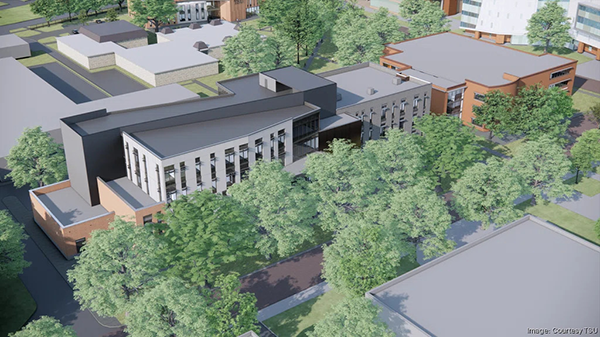
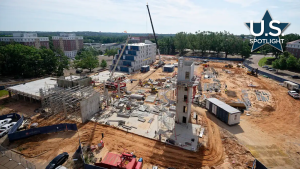
Phase one comprises three new academic and research facilities and began Â鶹´«Ã½Ó³» in 2025, assisted by more than $95 million in state funding: the interconnected Catalyst for Urban Transformation, the Nabrit Science Center and the Health and Wellness Center. All three will open during the university’s centennial year in 2027.
Phase two will take place over the next three to five years. Aided by a $10 million allocation from the Texas Legislature, plans include a proposal to replace TSU’s aging law school with the new RFQ Design – Texas Southern University – School of LawStatusConceptualValue$129MLocation3100 Cleburne St, Houston TXSectorPublic – State/ProvincialTypeEducational · New ConstructionData as of August 24, 2026 in collaboration with the Texas Facilities Commission.
A new Aviation and Engineering building, along with an Ocean of Soul marching band facility and residential housing, are also part of this second phase of the master plan. A proposed 10,000-seat on-campus football stadium and track complex will require private partnerships and fundraising in order move forward.
Longer term plans include two large multi-level parking garages, additional high-capacity student housing complexes and expanded on-campus museum spaces. These are to be funded through rolling university capital, donations and private investments.
While the Â鶹´«Ã½Ó³» industry in the Houston area will certainly benefit from these ambitious projects, it also means a shift toward alternative project delivery methods.
Execution of Texas Southern University Campus Master PlanStatusConceptualValue$1.7BLocation3100 Cleburne Street, Houston TXSectorPublic – State/ProvincialTypeEducational · New Construction · RenovationData as of August 24, 2026 will rely heavily on Public-Private Partnerships (P3s) and private donations as well as further legislative funding. Developers and tier-one contractors who can bring creative financing, design-build capabilities or long-term operations-and-maintenance structures to the table will hold a distinct competitive edge.
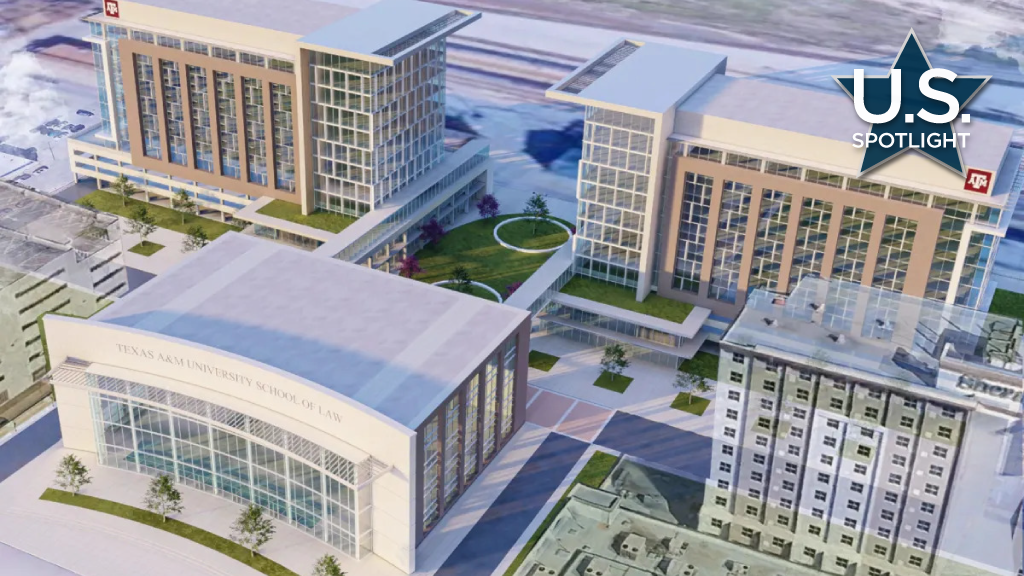
At the same time further north in Fort Worth, the Texas A&M University System a new eight-storey, 228,000-square-foot Law and Education Building this month. Although not the university’s first physical presence in the city, the ceremony inaugurated a major step towards an expanded downtown Fort Worth campus.
At the conclusion of the opening ceremony, the university took the opportunity to break ground on Fort Worth RIB A / Research and Innovation Building A – Texas A&M University SystemStatusAwardValue$180MLocation1501 Calhoun St, Fort Worth TXSectorPublic – State/ProvincialTypeEducational · New ConstructionData as of August 24, 2026, the next phase of A&M’s long-term investment in their students and the city’s workforce and local economy.
The 11-storey facility, scheduled for completion in 2029, is designed to bring university researchers, state agencies and private-sector partners together through the newly established Switchyard Innovation District.
This is an emerging multi-phase, $1.5 billion urban tech hub modeled after premier academic innovation hubs like MIT’s Kendall Square and Georgia Tech’s Tech Square.
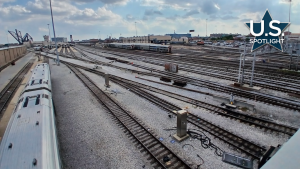
Bobby Ahdieh, chief operating officer for Texas A&M – Fort Worth, the Switchyard name recalls Fort Worth’s history as a rail center for cattle and grain in the latter half of the 19th century.
“A switchyard is also a meeting place, so it was that kind of dynamic we wanted to capture, but also the energy and movement associated with that.�
This multi-partner collaboration will expand opportunities for university researchers, Texas A&M System agencies and private-sector partners to collaborate in aerospace, engineering, agriculture, health sciences, virtual production, medicine, food and nutrition science, biotechnology and transportation.
Rather than operating like a traditional undergraduate campus with student housing and athletics, it is a research ecosystem focusing entirely on workforce training, graduate-level innovation and commercializing new technologies.
Local media has at least two additional buildings are envisioned for the Texas A&M-Fort Worth campus, including a Performance, Visualization and Fine Arts Building that will house a virtual production studio, and a Gateway Building to eventually replace the current law school building while serving as the campus’s front door.
Long-term, it is hoped the Switchyard Innovation District will integrate with the Fort Worth Convention Center, the 4.3-acre Water Gardens urban park, local transit and surrounding commercial and residential developments. This could lead to as many as 25,000 jobs and an estimated $3 billion in annual economic activity. Evidence of the benefits is already emerging with reports of developers purchasing nearby properties.
John Goff, a billionaire real estate executive and chair of the Fort Worth-Tarrant County Innovation Partnership, by the time it is built out, he imagines the Switchyard Innovation District will have a mix of higher education, housing and industry collaboration that will “help this city grow to new heights.”




Recent Comments
comments for this post are closed